Invest only the amount you are willing to lose. This is a risky investment with no principal protection.
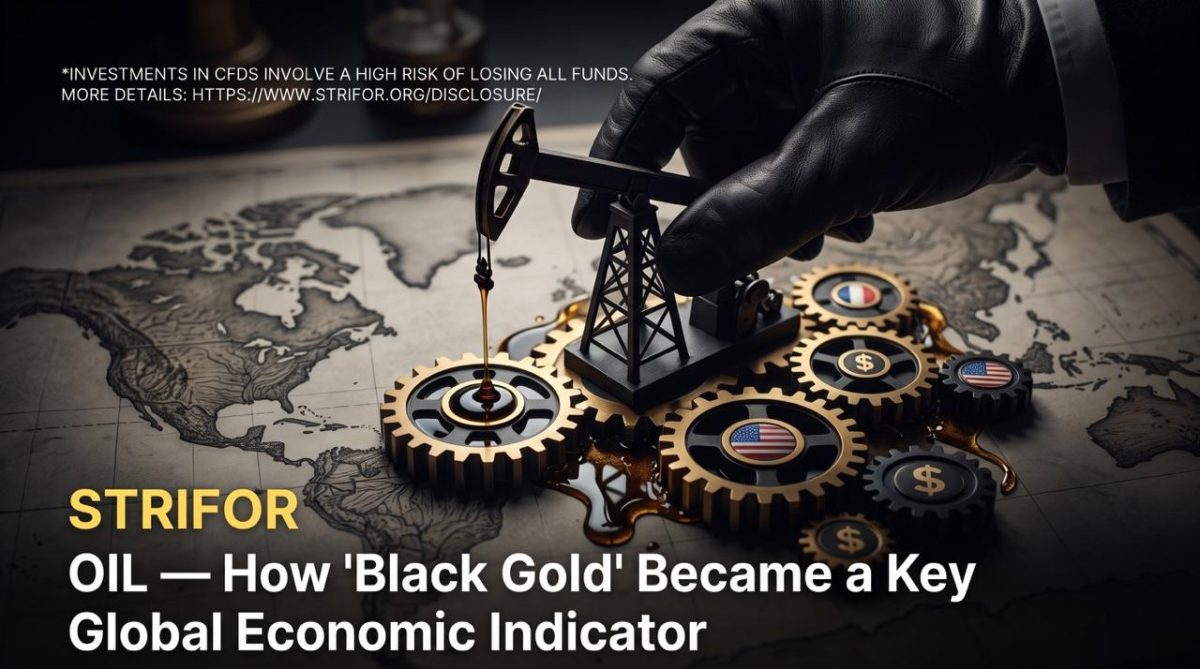
OIL — How “Black Gold” Became an Indicator of the Global Economy
Oil is more than just fuel. Its price affects transportation, manufacturing, inflation, currencies and government budgets. And sometimes, a single decision by oil-producing countries can change the mood of global financial markets. How did oil transform from an ordinary natural resource into one of the most important indicators of the global economy?
Interesting Fact: The Modern Oil Market Began to Change in One City
On September 14, 1960, representatives of Iran, Iraq, Kuwait, Saudi Arabia and Venezuela established OPEC in Baghdad.
The organization was created at a time when the oil industries of exporting countries were largely controlled by major international companies. Five countries joined forces to coordinate oil policy and protect their interests.
From that moment, the oil market became more than a story of production and consumption.
It became a space where economics, geopolitics, government policy and financial markets intersect.
Oil Became Part of the Global Economy
Why does the price of a barrel matter so much?
Because oil is used for much more than producing gasoline.
It is connected to transportation, aviation, industry, petrochemicals and the production of countless goods. As a result, changes in the price of crude can gradually move through the following chain:
oil → production and transportation costs → consumer prices → inflation → central-bank monetary policy.
This means that oil price movements can affect markets that have no direct connection to crude production.
OPEC and the Power of Supply
One of the key factors in the oil market remains supply.
OPEC uses production targets for its member countries, and changes in production levels can influence the balance of the global market. According to the U.S. Energy Information Administration (EIA), OPEC production-target cuts have historically often been accompanied by higher oil prices. However, it would be incorrect to assume that OPEC completely controls oil prices today.
Producers outside the organization also play a significant role. In 2024, non-OPEC countries accounted for approximately 65% of global crude oil production, according to the EIA.
Therefore, the oil market is a constant balance between production, demand, inventories, production decisions and market expectations.
Why Can Oil Move So Sharply?
Oil prices respond to many factors simultaneously.
These include:
- OPEC and OPEC+ decisions;
- global economic growth;
- changes in fuel demand;
- production levels;
- commercial inventories;
- geopolitical conflicts;
- sanctions;
- supply disruptions;
- the state of global industry;
- expectations about future demand.
It is precisely the combination of these factors that makes oil such an interesting financial asset.
For example, if the market expects supply to decline while demand remains high, participants may price in a higher cost of crude.
If expectations of weak economic growth and falling demand emerge, the situation can change.
Oil and Inflation: The Relationship Works Both Ways
Rising oil prices can increase inflationary pressure through higher fuel, transportation and production costs.
But the relationship also works in the opposite direction.
If the economy slows down, energy demand may decline. Weaker demand can put pressure on oil prices.
That is why oil is often viewed simultaneously as a commodity asset and a kind of indicator of economic activity.
This is where things become particularly interesting for financial markets.
Why Currency Traders Watch Oil
Oil price movements can affect currency markets, particularly currencies of countries whose economies depend significantly on commodity exports.
Changes in oil revenues can influence the trade balance, government revenues and expectations about economic conditions.
But there is also a broader effect.
If oil prices rise sharply, markets may revise their expectations for inflation. This, in turn, can change expectations about central-bank monetary policy.
As a result, the movement of a single commodity can influence currencies, bonds and stock indices through several economic channels.
Why Is Oil Called “Black Gold”?
The expression did not appear by chance.
Gold has historically been associated with preserving value, while oil became one of the key resources of the industrial economy.
Countries with large oil reserves gained enormous economic and geopolitical influence. At the same time, countries dependent on imported crude became highly sensitive to changes in its price.
As a result, the oil market has long moved beyond the energy sector.
Today, a change in the price of a barrel can become part of a much larger financial story — from inflation and interest rates to exchange rates and stock indices.
Why This Matters to Traders and Investors
The key lesson of the oil market is that commodity prices cannot be analyzed in isolation from the global economy.
Before a major move in oil, it is worth considering not only the chart but also the broader context:
What is happening with demand?
What is happening with supply?
What are producers doing?
How are inventories changing?
Are there geopolitical risks?
How does the market assess the outlook for the global economy?
This approach makes it possible to view oil not simply as another trading instrument, but as part of the global economic system.
For traders, this is especially important: the same price movement can have a completely different meaning depending on the reasons behind it.
Strifor provides access to CFD trading on financial instruments, including commodity markets. The company emphasizes mindful trading — understanding the market context, analyzing the factors driving price movements and making independent decisions.
Oil remains one of those assets worth watching even for people who do not trade commodities directly. Its price movements can reveal much more about the state of the global economy than may appear at first glance.